Thursday, 29 July 2010

Nymphas’ World: Rachel Haldane

Nymphas' World

Although Kay is only ten years old, she always knew that she broke away from the ordinary. However, she did not anticipate ever acquainting herself with a fairy. Kay discovers a new world of old that no other human has ever trespassed before, meeting mythical creatures, strange beings and experiencing magic!

Kay and her brother Rob explore the land of Nymphas and learn much about fairy origin. There are, however, evil Nymphas as well as virtuous. Rob is snatched by the Onyx Nymphas and Kay has no choice but to go...

Beyond the Onyx Mountains.


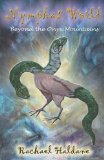
Nymphas' World has the most off-putting cover I've seen on a book for a long time. It's an ugly image, badly executed, without any comedic value to lessen its impact.

The back cover copy is, as you can see, confused and confusing, and can't even manage to remain in one tense. And then we get to the text inside.

It takes a lot of effort to write a novel and this one is relatively substantial, at nearly four hundred pages long: I applaud Ms Haldane’s efforts for getting so far. But I'm afraid that her writing is nowhere near good enough to be published.

She makes so many of the basic errors that I wondered at times if it was intentional: she writes in a very passive voice; she lists almost every action her characters perform, so reducing her pacing to a plodding, pedantic crawl; her sentences are so poorly constructed that it is often difficult to extract any meaning from them; and she has a tendency to sacrifice clarity in favour of big, impressive-sounding words.

These are issues that even the most skilled editor could not fix: with all due respect to Ms Haldane her writing just isn't up to a good enough standard, I'm afraid. I went out of my way to be lenient here, but even so I read just four pages out of three hundred and eighty-four. I strongly advise this writer to read more, and to learn more about the craft of writing, before she considers publishing anything else.

Thursday, 22 July 2010

The Darkness: Bill Kirton

When Tommy Davidson is found with his throat cut, his brother Andrew's shock turns to thoughts of vigilante retribution. Known villains, including the person indirectly responsible for the death, begin to disappear. Thanks to the efforts of one of Cairnburgh's cleverest lawyers, each has managed to evade justice. But not any more. Meantime, rape victim Rhona Kirk starts a new life in Dundee but finds it difficult to shake off her past. As DCI Jack Carston tries to find what links the various missing persons, he's aware of his own darker impulses and of an empathy between himself and the vigilantes. His investigation becomes a race against time and against the pressure of darkness.


The jumbled and dull back cover copy for The Darkness is no indication of the quality of the text of the book itself: I found a lot here to keep me interested, and would like to see what happens to Bill Kirton's work when it is passed through the hands of a competent and demanding editor.

The problems I found—a tendency to exposition, a lack of clear characterisation, a couple of clichés and a few punctuation problems—are all fixable because the underlying writing is strong, clear and fast-moving. Kirton has a raw talent which gives an edge to this book that most writers will never achieve: if he focuses on revising his next text to a higher standard I can see him doing very well indeed.

I was particularly harsh with Mr. Kirton in my judgement of his book but despite that, I read twenty-four of his three hundred and thirteen pages. If I had found this on the slush pile, I would almost certainly have asked to see more: as it is, I am going to cautiously recommend this book despite its flaws.

Thursday, 15 July 2010

Moonlight: Keith Knapp

Fiction/Horror

No more room.

It began with a power outage. A power outage that went beyond lights and televisions. Clocks stopped telling time. Cell phones no longer received signals. Cars became dead relics that wouldn't start.

As the world around them becomes darker, so do the inhabitants of the small town of Westmont, Illinois. A mysterious and evil presence has taken a hold over the village, making the once peaceful town a place of violence and despair

A small group of individuals, untouched by this presence, must uncover the mystery of why they remain normal and discover what—or who—is taking control of their town, one soul at a time.

Because the Man in the Dark Coat is out there. Hunting them.

And not everyone can remain untouched forever.


In the tradition of Stephen King, Dean Koontz and Clive Barker, Keith Knapp tells a horrifying tale of innocence and sin, and what people will overcome to defeat their own innermost demons in the search for hope. This is his first novel.


Moonlight shows great potential. It has an interesting premise and the writer's style is immediate and very accessible, full of believable characters dropped into tricky and surprisingly plausible situations.

Where the book fails is in its editing. I found numerous problems with its punctuation (when will self published writers learn the difference between hyphens and dashes?), a few clichés; redundant statements, some lapses in tense; and a lot of repetition of various plot-points. I understand this last was intended to reinforce the plot but I found it patronising and infuriating, and it only really served to slow the pace of an otherwise fast-moving story.

The author would be wise to improve his editing techniques, too. There is a scene in which a generator will not work which I found particularly irritating: I've lived off-grid for the last thirteen years and we've had several different diesel generators during that time, as have our off-grid neighbours: I've never seen a single generator to work in the way described here. I'll admit I've not had hands-on experience of every single model of generator that there is, and I'm no expert in their workings: but I know enough about them for this description to jar me right out of the narrative—which is exactly what writers should aim to avoid.

In summary, then: a book with real promise and a writer who could do well, let down by basic errors in editing, technique and research. All these should improve with experience, so I hope for better from Mr. Knapp in the future. I read twenty six pages out of a total of four hundred and sixty five, and would have read more had that generator been a little more true-to-life.

Thursday, 8 July 2010

Red Poppies: S. P. Miskowski

Five stories revealing the chilling reality behind the roles women play every day. A sense of dread pervades the atmosphere in these wickedly funny, dark tales of female desperation.

Red Poppies
A house cleaner becomes the muse to a crazy trophy wife and then finds her status threatened by a newcomer.

A Personal Recommendation
A bright student will do whatever it takes to pay for her education.

You Never Know
The eccentric subjects of a documentary offer more strange behaviour than the filmmakers expected.

Next to Nothing
A bitter catering company employee reaches the breaking point during a party at a wealthy client’s house.

Idiot Boy
Some siblings live large and others are born to clean up the mess. (Idiot Boy was originally published by Identity Theory.)


First, the bad news. The back cover copy for this book tells me nothing about the book or its author and needs to be substantially reworked; the layout of the front matter needs addressing; and the image on the jacket is muddy and dull, and could be vastly improved (it would help, too, if the title were easier to read). All these things do affect sales, and with self-published books being so difficult to sell it seems foolish to me that so many writers shoot themselves so firmly in the foot by producing covers and layouts which are below par.

And now, on to the writing. The short story is a very difficult form to master. There's no room for even a single mistake: every word has to earn its keep, and in an anthology every short story has to work alone and in conjunction with the others that it shares space with.

In Red Poppies there are a few glitches in punctuation which I mostly ignored, because I found the writer's voice so clear and compelling; some of the plots felt a little trite; the writer has a tendency to exposition which on occasion chopped into the flow of text. However, if she continues to refine and improve her work, and reads widely in the genre, I suspect we'll see more from Ms Miskowski in the future. This a good collection, which could do with a little more polishing and a few more stories: but which nevertheless carries with it echoes of Grace Paley and Aimee Bender. I read it all, and recommend it.

Thursday, 1 July 2010

Leviathan's Master: David M Quinn

HISTORICAL FICTION It was the biggest sailing vessel ever built and the world's first supertanker. In the winter of 1907, the T.W. Lawson, a four-hundred foot schooner with seven masts, makes her first transatlantic crossing with more than two million gallons of kerosene to be delivered to London. With almost fifty years of sailing experience, Captain George W. Dow Is not intimidated, despite the Lawson's checkered history. But hurricane winds and an angry sea conspire to defeat man and machine. Bereft of her sails, the giant ship is trapped in treacherous shoals off the southwest coast of Britain. Seventeen lives are lost, including a local pilot trying to avert disaster. Now, Captain Dow is called to account—most especially to himself. Leviathan's Master is a true story, transformed into a gripping historical novella by the captain's great, great nephew.
Praise for David M. Quinn’s

It May Be Forever—An Irish Rebel on the American Frontier

  • "Master storyteller, David Quinn, erases time.... To transport the reader is the writer's job. Quinn does just that." Mary Sojourner, Novelist and NPR Contributor
  • "A beautifully written historical novel filled with excellent research and characters! Highly recommended!" USABOOKNEWS.COM
Visit the author's website: www.davidquinnbooks.com

iUniverse Editor's Choice


This is a momentous day for, after more than a year of reviewing books here, I have finally found a self-published writer who understands the difference between the hyphen and the em-dash. Hurrah! Here ensues much rejoicing.

Right. That's quite enough of that. Because apart from Mr. Quinn's impeccable em-dashery Leviathan's Master: The Wreck of the World's Largest Sailing Ship fails on the same old points: his writing just isn't strong enough. His dialogue is wooden, and veers queasily between an oddly-formal, Hollywoodesque archaic pattern and a more modern idiom: he uses dialogue to present great big chunks of exposition, so reinforcing its woodenness; and I found several contradictions, lapses of point of view and tense, and problems with logic: for example, the narrator describes the house he is in from various points outside; but he is bed-bound, and was brought to this house following an accident: he can't even walk to his bedside chair, let alone walk around the outside of the house; so how could he possibly know what the house looks like from the outside?

Once again, then, this is a story with potential let down by lacklustre writing. A better editor would have picked up these mistakes: but then a better writer would not have made them. I did my best to be kind, and managed to read fourteen pages out of one hundred and nine.